
Let us assume the most common scenario first.
No ocean. No river. No dramatic skyline.
Just a suburban Brisbane block, a realistic budget, and the desire for a house that feels genuinely good to live in.
This is where orientation quietly does its best work.
1.Living and dining : Give Them the Best Seat in the House
If there is no view or outdoor space dictating otherwise, living spaces should almost always be placed to the north.
The reasons are simple:
- These are the most used spaces in the home
- They benefit the most from natural daylight
- Winter sun can be welcomed deep into the house
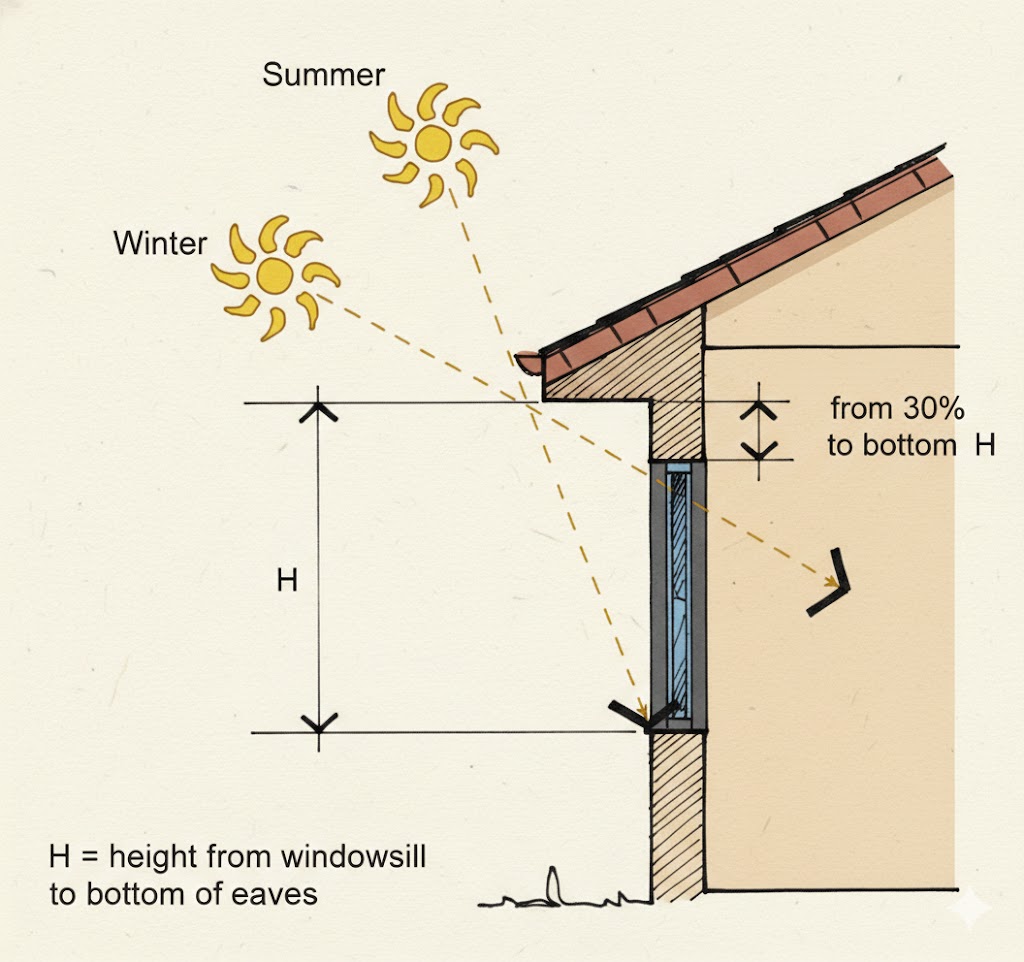
- Summer sun can be easily controlled with well designed eaves
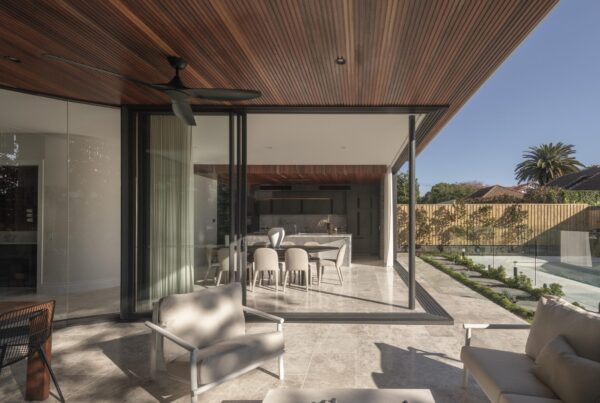
North facing living areas paired with correctly sized horizontal shading are one of the few design decisions that improve comfort, reduce energy bills, and make a home feel brighter and more generous, all without adding cost when planned early.
It is not flashy. It is just good design.
2.Bedrooms: Morning Light Rather Than Afternoon Heat
Bedrooms are where the house should slow down.
East or north east orientations work best because:
- You receive soft morning sun
- Rooms warm naturally after a cool night
- You avoid harsh late afternoon heat
West facing bedrooms can work, but they need more attention. Better shading, more careful window sizing, and sometimes additional buffering are required.
Very few people sleep well in a bedroom that stores heat all afternoon.
3.Service Areas: The Quiet Protectors of Comfort
Laundries, bathrooms, storage rooms, stairs and wardrobes do not need prime outlook or perfect sun.
That is why they are often placed:
- On the western side
- On the southern side
- Or between living and sleeping zones
These spaces act as thermal buffers. They take the hit so the important rooms do not have to.
Think of them as the house quietly doing damage control.
4. Home Offices: Calm, Bright, and Controlled
With more people working from home, the study is no longer an afterthought.
North or east orientations generally work well, but glare control matters. A bright room supports focus. A blinding room does not.
This is where shading, window placement, and even desk orientation become important. These are small decisions that significantly affect daily comfort.
5. Strong Lines of Sight
Clear sightlines contribute significantly to comfort and spatial clarity.
Being able to see across multiple spaces helps homes feel open and connected, even when the footprint is modest. This is particularly valuable for families with young children and open plan living arrangements.
Strong sightlines are created by aligning openings, reducing visual clutter, and positioning key rooms so they visually relate to one another.
Good flow depends as much on what you can see as how you move.
6. A Bit of Sun Science Without Turning It Into a Lecture
Here is the useful version.
In Brisbane:
- Summer sun sits high in the sky
- Winter sun is lower and comes predominantly from the north
- Horizontal shading such as eaves works best on north facing façades
- Low afternoon sun from the west is the hardest to manage
This is why:
- North facing windows pair well with horizontal eaves
- East and west windows often need vertical screens, fins, or reduced glazing
The sun is not the problem. Poor planning is.
7. The Quiet Rule Most People Discover Too Late
Orientation decisions are easiest to make at the very beginning.
Once a floor plan is fixed:
- Shading becomes compromised
- Window sizes become awkward
- Mechanical systems grow larger and more expensive
- Comfort becomes something that needs to be managed instead of enjoyed
When orientation is resolved early, the house works with the climate rather than fighting it.
Final Thought
Good orientation is not about rigid rules.
It is about understanding climate, respecting how people live, and knowing when to bend and when not to.
Sometimes you design for the view.
Sometimes you design for the sun.
The best homes manage to do both.
That is not technical wizardry.
That is thoughtful architecture..